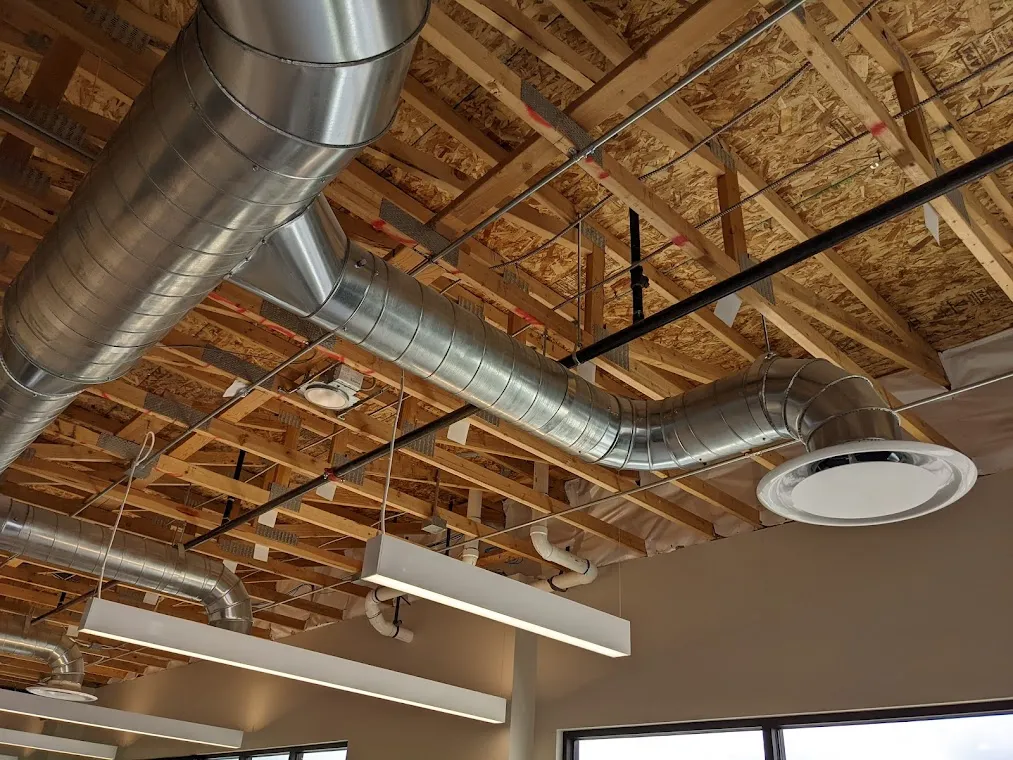
Every property has distinct heating and cooling requirements influenced by square footage, construction, insulation, occupancy, and existing equipment. Reviewing these details helps identify appropriate HVAC services while avoiding unnecessary adjustments. Knight’s Castle Koolers evaluates equipment condition, thermostat operation, airflow distribution, ductwork, and system capacity to understand factors affecting indoor comfort. This process supports service recommendations based on the property’s configuration and the performance of its existing heating and cooling equipment.
Older buildings and newer construction can experience different HVAC challenges. Aging components, uneven temperatures, restricted airflow, frequent cycling, and changing seasonal demands may affect system reliability. Identifying the source of these concerns helps determine the most appropriate next steps. Service recommendations can then be aligned with equipment condition, property characteristics, and the level of heating and cooling required.
Equipment condition, thermostat accuracy, ductwork, airflow, and system capacity all affect HVAC performance. Evaluating these factors helps maintain comfortable indoor temperatures, support energy efficiency, and ensure reliable heating and cooling.
We provide HVAC installation, replacement, repairs, maintenance, ductwork, and indoor air quality services based on each property's needs. Considering building layout, equipment compatibility, and system requirements helps support reliable performance in residential and commercial spaces.
Comfortable indoor environments require heating and cooling equipment that responds effectively to changing weather and daily usage. Knight’s Castle Koolers considers the existing HVAC configuration, equipment condition, airflow requirements, and indoor temperature expectations before recommending a service. Understanding how the system operates helps establish appropriate priorities and address concerns that may affect more than one component.
Property owners may require air conditioning installation, HVAC replacement, heating repair, diagnostic testing, ductwork adjustments, or indoor air quality improvements. Each service involves different equipment requirements and technical considerations. Reviewing filters, electrical connections, thermostat response, duct joints, and system operation can help identify conditions affecting performance. This organized process supports informed service decisions and helps keep HVAC work structured from the initial evaluation through completion.
Residential and commercial properties have different HVAC needs. We evaluate equipment condition, airflow, temperature differences, and building layout to recommend suitable repairs, maintenance, adjustments, or system upgrades.
HVAC requirements depend on property size, system age, equipment type, and existing ductwork. We tailor installation, replacement, repair, and maintenance services to address specific needs and support dependable system performance.
Proper HVAC service involves checking electrical controls, duct connections, thermostat settings, and airflow restrictions. Evaluating these components helps identify performance issues and provide practical solutions for reliable heating and cooling.
Evaluating equipment condition, airflow, duct connections, and temperature control helps identify potential performance issues. This allows us to recommend suitable HVAC services based on your system's condition and specific heating and cooling needs.
Split systems, packaged units, and ductless mini-splits each have different service requirements. We provide installation, repairs, maintenance, and replacement solutions based on your equipment type, property layout, and everyday comfort requirements.
Thermostats, electrical connections, filters, blower assemblies, and other HVAC components all contribute to system performance. Inspecting relevant parts helps identify possible issues and determine appropriate repairs or maintenance to support reliable heating and cooling.
Duct design, equipment capacity, ventilation, and airflow distribution all influence indoor temperatures. Evaluating these factors helps address uneven heating and cooling, improve air distribution, and maintain a more comfortable environment throughout residential and commercial properties.